Storage Of Data At Home
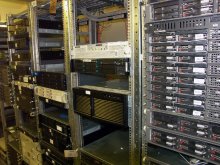 It is reported that amateurs and IT specialists are setting up data processing centres in their homes by placing equipment in improvised server rooms, garages, basements or home offices. These people are called serverols. These are people who want to be closer to the equipment they use.
Home-based data processing centres, or as they are referred to as " home-based DVs " , play an important role in modern life and the development of IT technologies. DCC data, in contrast to large-scale dates-centres, are pioneers in the testing of server equipment. Such enthusiasts are passionate to IT and, in general, some of the first are beginning to use new server systems in extreme conditions.
The reasons for such data centres are varied. For example, small web hosting, launching of their unique projects or simply passion for electronics and IT.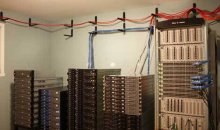 Whatever the motivation, such a project in any case requires some adaptations, including both the refinement of food and network connections, and the adaptation and updating of cable divorce throughout the house. We offer you some examples of such projects.
In the basement
Canadian IT specialist Alan Bodro (Alain Boudreault) has corporate class equipment in its arsenal from producers such as Dell, HP, Sun, Juniper, IBM and IBM BladeCenter. He's been putting these things in the basement of his house. Its website provides a detailed overview of the installation, including diagrams of all components. Date-centre includes Open Stack MAAS clouds (Metal as a Service) and several data storage systems (ISCSI and Fiber Channel).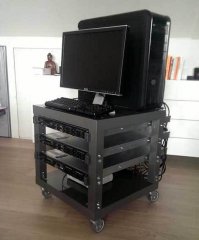 " The first step was the installation of an electric power plant that would allow 40 amper currents at 240 volts, i.e. capable of handling loads 9, 6 kW/h, if necessary, is described by Alan. He teaches the development of applications and uses his DC for testing. " The silvers are rarely launched at all times, so the average flow is 1-2 kWh per hour, he says. The electricity cost in Quebec is about 7 cents per kW. Bodro says that this type of DC is not an exercise for weakness.
Data Processing Centre - YouTube
Some of the owners of the domestic DCs put videos on YouTube.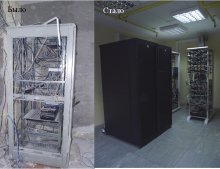 The most popular is Home Center Data Project, another project in Canada, which started in 2005 as two computers in the closet and increased to over 60 servers by 2013. The project has been documented in a series of videos that have gained over 500,000 views on YouTube. Large cable connections, refrigeration and improved network infrastructure are also documented on the rollers and on the website.
" This project was not designed for profit " , written by Etienne Vailleux of Hyperweb Technologies. " This facility was assembled as a hobby, but after some time, it quickly became passion. "
In 2013, the project migrated from one house to another. " The body of the foundation was specially designed to accommodate servers and air conditioners " , told Valle. " The project currently contains 15 servers whose capacity is 60 Mbit/s. "


